Tasmanian Devil Mouth Cancer
Http Onlinelibrary Wiley Com Doi 10 1002 Ijc 25374 Pdf

Some Cancers Become Contagious Story Of Tasmanian Devils Discoveries In Animal Sciences

The Tasmanian Devil And Dftd A The Fur Is Mostly Black White Download Scientific Diagram
Https Canvas Brown Edu Courses 835420 Files 30507119 Download
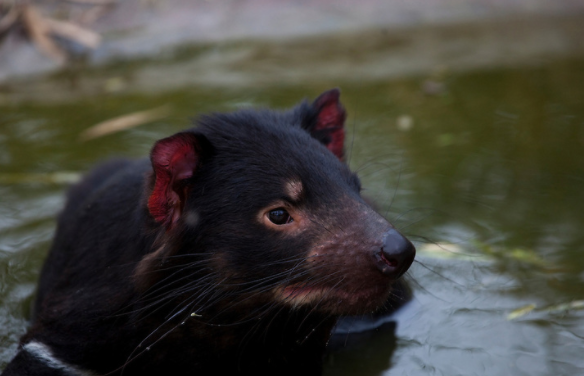
The Tasmanian Devil Presentation
Http Sciencecases Lib Buffalo Edu Files Dftd Pdf
Environment facial cancer threatens tasmanian devils the cancer which is transmitted from one animal to the other via biting has already wiped out up to 90 of the species.
Tasmanian devil mouth cancer. Human drugs target tasmanian devil cancer. Dftd was first described in 1996. During the 1990s there were as many as 150 000 but the animal population was hit by a deadly mouth cancer that drastically cut numbers. Between 1996 and 2015 dftd wiped out 95 of affected.
Affected high density populations suffered up to 100 mortality in 12 18 months. The disease has caused a massive. The tumours often become very large and usually cause death of affected animals. There were as many as 150 000 but the animal population was hit by a deadly mouth cancer that.
Tasmanian devils have long been circulating in the media for their demise at the hands of a contagious mouth cancer that pushed the species to near extinction. Tasmanian devil facial tumour disease dftd is a transmissible cancer that affects tasmanian devils. Tasmanian devils are strictly carnivorous. In the subsequent decade the disease ravaged tasmania s wild devils.
The tasmanian devil isn t the first animal to be. Tasmanian devils known for their ferocious temperaments have been plagued by a contagious facial cancer in recent decades. Devil facial tumour disease dftd is an aggressive non viral clonally transmissible cancer which affects tasmanian devils a marsupial native to australia. Now a new project has taken its.
Human drugs target tasmanian devil cancer. This rapidly spreading condition is a rare contagious cancer that causes large lumps to form around the animal s mouth and head making it hard for.