Tasmanian Devil Cancer

Facing Facts Why A Transmissible Facial Cancer Is Decimating Tasmanian Devil Populations Science In The News
Http Onlinelibrary Wiley Com Doi 10 1002 Ijc 25374 Pdf
Https Www Jimmunol Org Content 195 1 23 Full Pdf
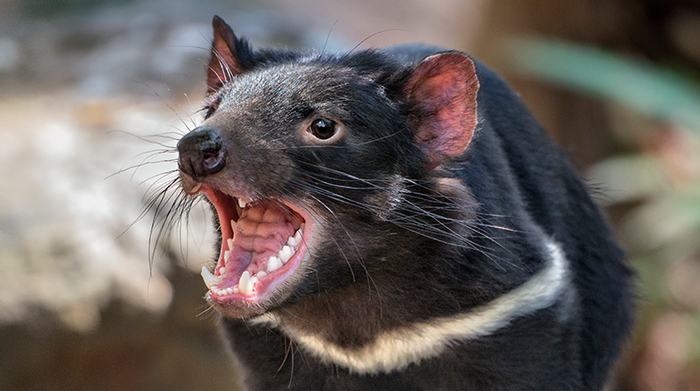
Disease Threatens Extinction Of The Tasmanian Devil Cell And Molecular Biology
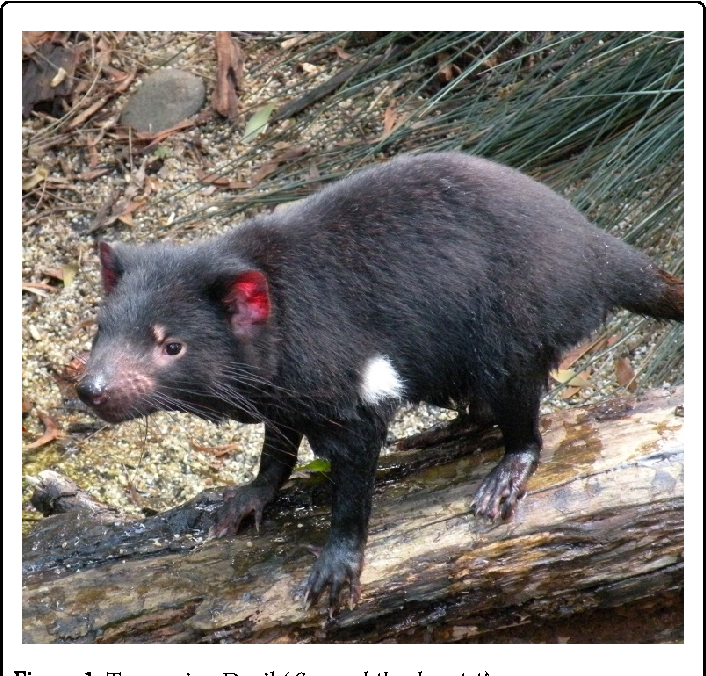
Dftd A Contagious Fatal Cancer That Threatens The Tasmanian Devils Semantic Scholar

Tasmanian Devil Facial Tumor Disease Natureisbrutal
The tasmanian devil s major histocompatibility complex or mhc is particularly important in the mechanism of the cancer.
Tasmanian devil cancer. While there used to be. Nearly 95 percent of affected populations have died and most of the island is infected. In the subsequent decade the disease ravaged tasmania s wild devils. More than 90 of the tasmanian devil population was lost in recent years due to devil facial tumor disease dftd a nearly 100 fatal cancer first detected 20 years ago.
The only known contagious cancer which saw the wild devil populations plummet by up to 90 per cent. The cancer is highly infectious and lethal and the tasmanian devil population has. Aussie ark said. Tasmanian devils reintroduced to australian mainland after 3 000 years.
In the curious case of the tasmanian devil there is much still to be learned about cancer biology and the evolutionary arms race between malignant cells and their hosts. Because tasmanian devils have extremely low levels of genetic diversity and a chromosomal mutation unique among carnivorous mammals they are more prone to the infectious cancer. Dftd was first described in 1996. As the ferocious tasmanian devil battles a fatal cancer outbreak australian biologists are breeding a viable cancer free population in captivity.
Devil facial tumour disease dftd is an aggressive non viral clonally transmissible cancer which affects tasmanian devils a marsupial native to australia. Tasmanian devils are one of the very few unlucky creatures on this planet to carry a transmissible cancer. By 1996 their numbers were a mere. Affected high density populations suffered up to 100 mortality in 12 18 months.
Devil facial tumor disease or dftd is a transmissible cancer that tasmanian devils spread through bites. Since removing the cats and foxes. A transmissible cancer called devil facial tumor disease dftd.
