Pink Fairy Armadillo Tail

The Pink Fairy Armadillo Pest Wiki

Pink Fairy Armadillo Alchetron The Free Social Encyclopedia
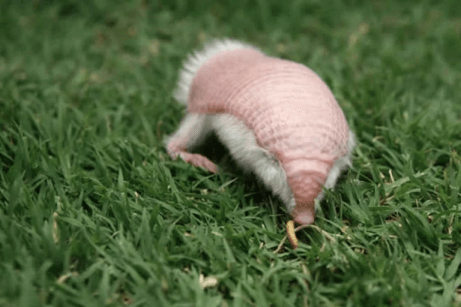
What On Earth Is A Pink Fairy Armadillo My Animals

Pink Fairy Armadillo Pink Fairy Armadillo Png Transparent Png Kindpng

How Do You Feel About The Pink Fairy Largest Heart

Pin On Amazing Animals
These animals live a nocturnal subterranean lifestyle making it impossible for them to live above ground for any extended period of time.
Pink fairy armadillo tail. The pink fairy armadillo can live anywhere from sea level to 1500m in elevation. Other articles where pink fairy armadillo is discussed. The pink fairy armadillo inhabits dry grasslands and sandy plains with thorn bushes and cactus. Truncatus is nocturnal and sluggish except when.
Its armor is flattened at the rear so it is able to compress the dirt behind while digging. The pink fairy armadillo chlamyphorus truncatus or pichiciego is the smallest species of armadillo mammals of the families chlamyphoridae and dasypodidae recognized by a bony armor shell first described by richard harlan in 1825. Pink fairy armadillos are found in dry grasslands and sand filled plains. This solitary desert adapted animal is endemic to central argentina and can be found inhabiting sandy plains dunes and scrubby grasslands.
The tail of the pink fairy armadillo is more than just an appendage that hangs from the rear of the body. The pink fairy armadillo or pichiciego deserves without a doubt a place among the rare and extraordinary of nature. This rare mammal unique to south america is a creature with both amazing and very rare abilities and characteristics. Females posses two mammae.
Known by the name pichiciego it is found in central argentina. The tail is spatula shaped and protrudes from a notch in the rear plate. The pink fairy armadillo cannot survive without its natural habitat so it is a bad idea to keep a pink fairy armadillo pet. Pink fairy armadillos also prefer areas with some shrubbery.
The hard shell of this species is made up of 24 bands that enable it to curl up into a ball. In contrast the endangered giant armadillo priodontes maximus can be 1 5 metres 5 feet long and weigh 30 kg 66 pounds. The pink fairy armadillos have a flexible carapace shell that is attached exclusively to its body by a thin dorsal membrane also its spatula shaped tail protrudes from a vertical plate at the blunt back of its shell. The tail cannot be raised and as a result drags behind the animal as it walks.
Because it is thick and hairless the tail is used for balance and stability when all other limbs are being used for other tasks. Their body length excluding their tail ranges between 90 mm and 115 mm. Its habitats include scrubby grasslands dunes and sandy plains. The pink fairy armadillo has the nickname of sand swimmer because it can burrow through soil as quickly as a fish swimming in the sea.
Pink fairy armadillo is an armadillo species. Rain presents life threatening risks to the pink fairy armadillo. Long including the tail the pink fairy armadillo or lesser pichiciego chlamyphorus truncatus of central argentina is only about 16 cm 6 inches.
