Earth S Interior Temperature

What Is The Temperature Of The Earth S Crust

The Temperature Distribution Of The Earth S Interior To The End Of Download Scientific Diagram
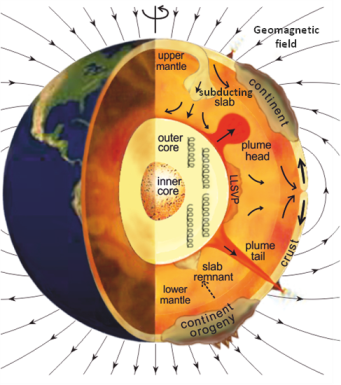
The Two Great Engines Of The Earth S Interior Geomagnetism Org

The Variation Of Temperature Within The Earth Download Scientific Diagram

Earth S Internal Composition Sci Pi Education

Structure Of The Earth Let S Talk Science

The earths interior a look at the layers of the inner earth studying the earths interior can help us to understand earthquakes volcanoes plate tectonics and more about the inner earths natural processes these layers of the earth interact in ways that affect life on the earth.
Earth s interior temperature. The crust the mantle and the core. The hottest temperature ever recorded was 159 3 f 70 7 c and the coldest temperature was minus 128 6 f minus 89 2 c. As a result scientists must infer the temperature in the earth s deep interior indirectly. Away from tectonic plate boundaries it is about 25 30 c km 72 87 f mi of depth near the surface in most of the world.
The average temperature on earth is 61 degrees f 16 c. Earth s internal heat budget is fundamental to the thermal history of the earth the flow of heat from earth s interior to the surface is estimated at 47 2 terawatts tw and comes from two main sources in roughly equal amounts. Scientists have taken the temperature of earth s innards more than a thousand miles beneath the surface and found that the mercury there soars to about 6 650 degrees fahrenheit. The deepest layer is a solid iron ball about.
The hard brittle crust extends from earth s surface to the so called mohorovicic discontinuity nicknamed the moho the moho is not located at a uniform depth but about 10 kilometers 6 miles below the seafloor and about 35 kilometers 22 miles beneath the surface of continents. The earth s interior is composed of four layers three solid and one liquid not magma but molten metal nearly as hot as the surface of the sun. Definition temperature density. That s about as hot as the surface of the sun but vastly cooler than the sun s interior.
From this evidence earth s core temperature is estimated to be around 5 000 to 7 000 degrees celsius. These are waves of energy that travel through earth and they. Scientists are able to understand earth s interior by studying seismic waves. Observing the speed at which of passage of seismic waves pass through the earth allows geophysicists to.
The radiogenic heat produced by the radioactive decay of isotopes in the mantle and crust and the primordial heat left over from the formation of earth.